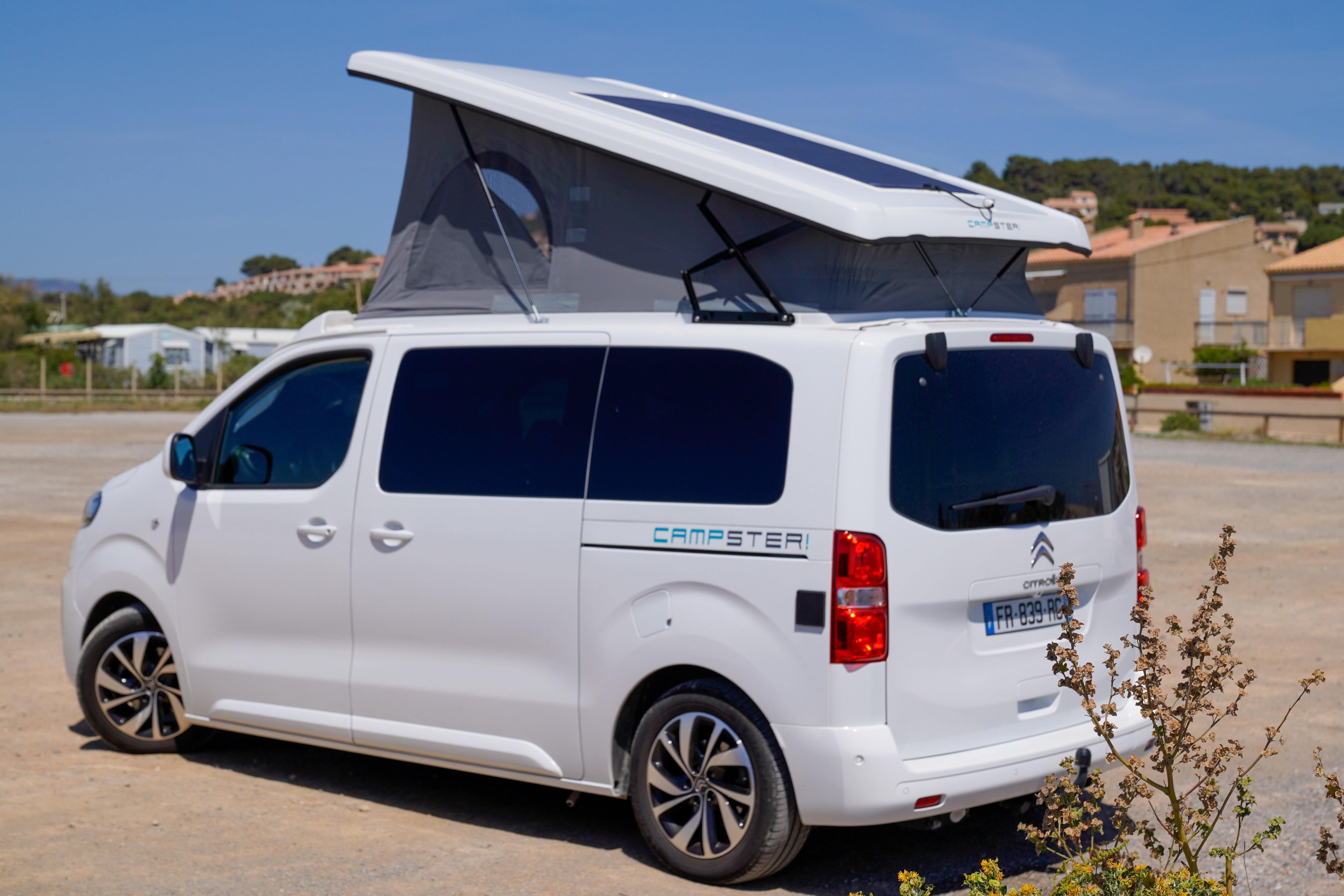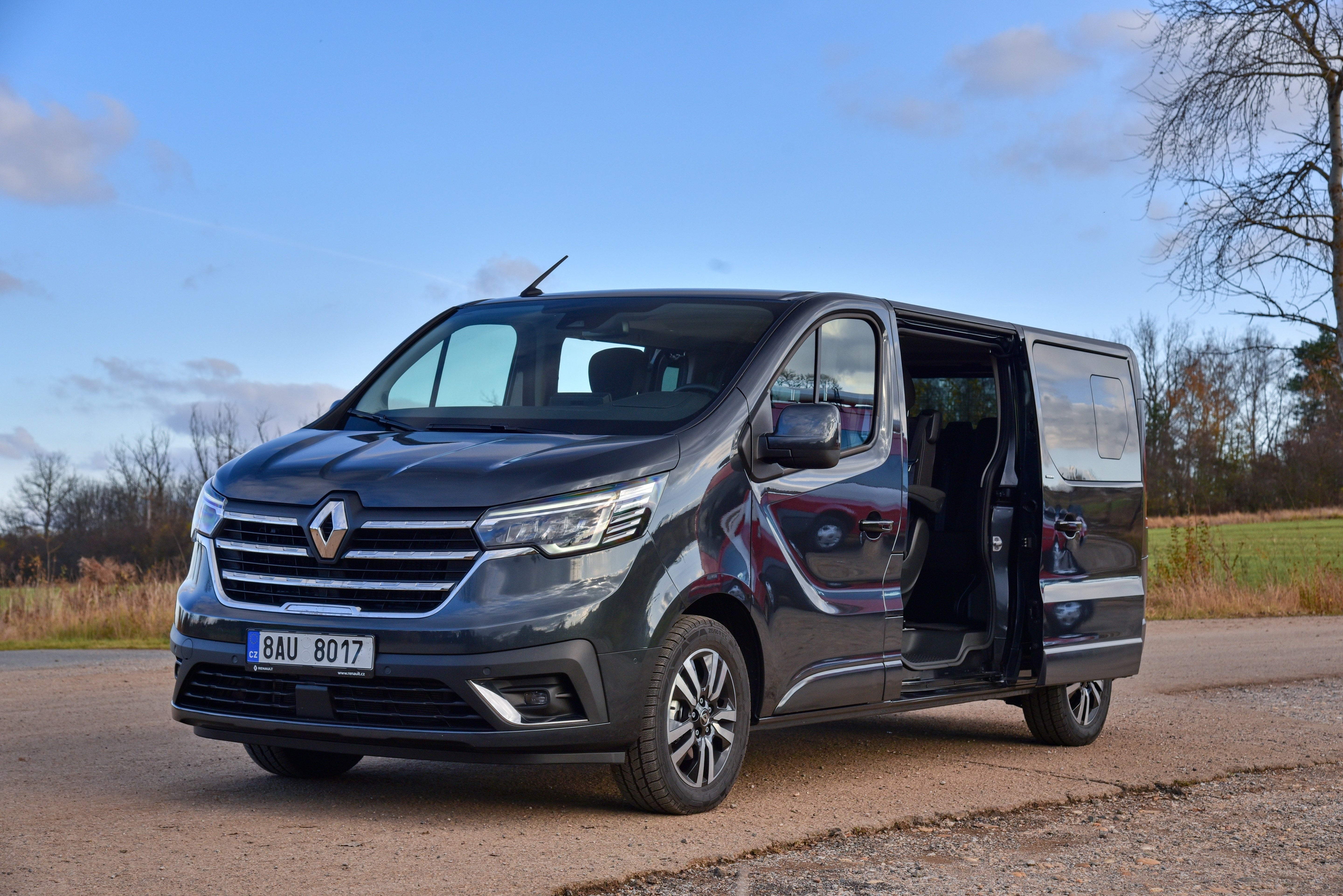

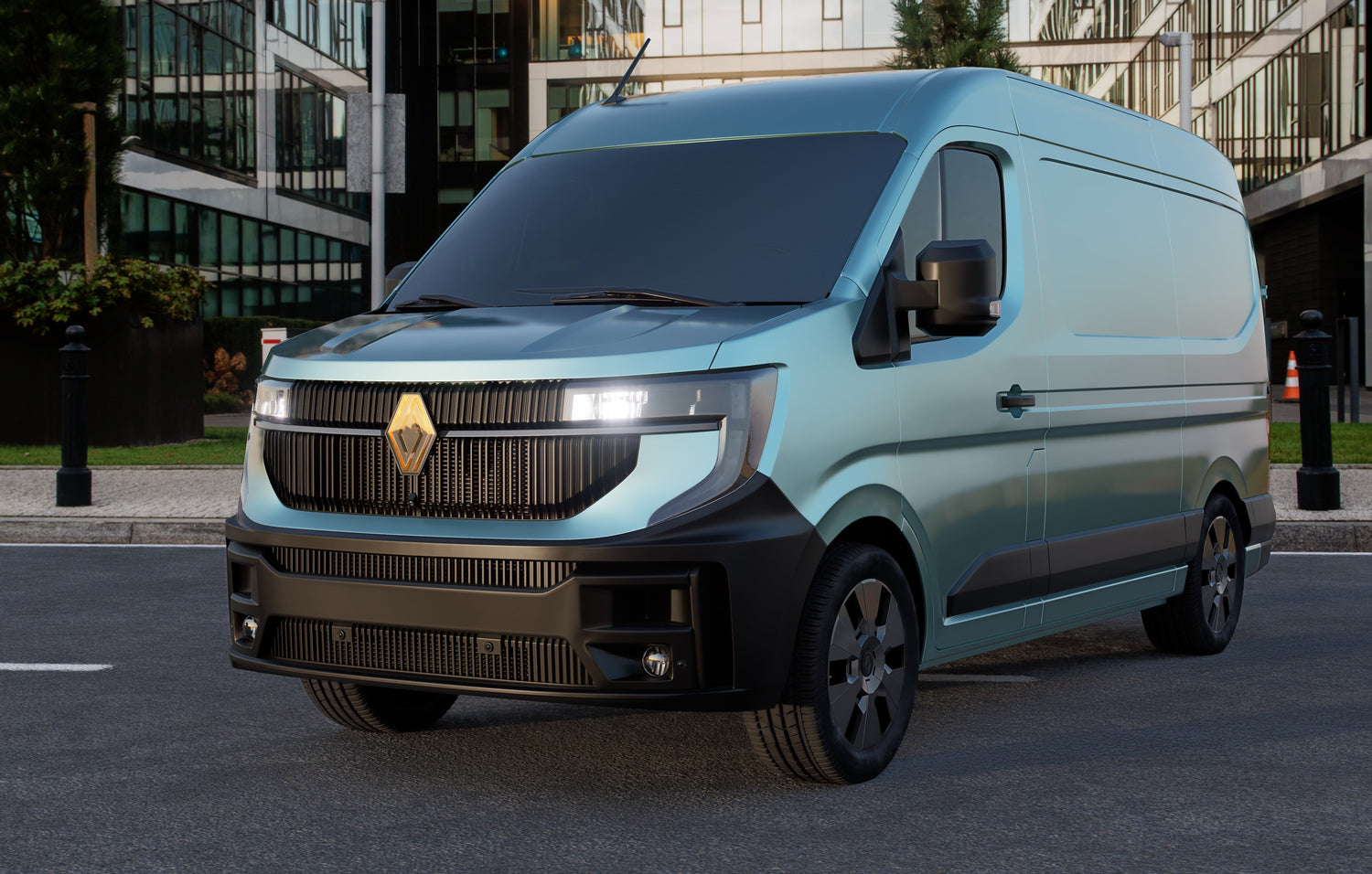
Whether it’s a short-bed or long-wheelbase model, diesel or E-Tech electric —the Renault Master offers the perfect foundation for turning it into a camper. This spacious van is one of the most popular in Europe and is often used as the base for motorhomes and campervans. In this post, we’ll show you how you can use all versions of the Master for camping, what features are missing from the factory, and how you can fill those gaps with clever accessories. We’ll also share tips on camping with an electric car and take a look into the future: the upcoming BOXIO Rack as a quick conversion solution (also ideal for leased vehicles!).
Best of all: With BOXIO’s modular, removable solutions, you can transform your Master into a camper in minutes without any permanent modifications. Whether it’s a mobile camping bathroom with a dry toilet and sink, an outdoor kitchen with a gas stove and cooler, or a cozy outdoor living room with a table and chairs—you can carry it all in the Eurobox format. In the end, you’ll see: All Renault Masters—whether old or new, small or large—are suitable for camping when equipped properly!
[products_1]
Camping Potential: Why Is the Renault Master a Great Camper?
The Renault Master is a large panel van available in many variants. It comes in several lengths (L1–L4) ranging from about 5.0 to 6.8 m, as well as different roof heights (H1–H3). As a result, depending on the model, the Master offers between about 8 and 17 m³ of cargo volume— plenty of space for customization. The high-roof variants, in particular, even allow for standing height inside, which makes life in the van significantly more comfortable. The box-shaped body with relatively straight walls makes it easy to install furniture or modules, and the large side sliding door as well as the rear doors make access simple.
In addition, as a commercial vehicle, the Master is designed for durability and payload capacity —depending on the version, payloads of over 1.5 metric tons are possible. So even when converted, there’s still plenty of room left for camping gear. Price-wise, a used Master is often cheaper than comparable models (e.g., the Sprinter), which makes it attractive for DIY conversions. It shares many components with its sister models (Opel Movano, Nissan NV400), making spare parts readily available and maintenance straightforward. No wonder, then, that the Master is popular in the camper scene. Numerous conversion companies and DIY enthusiasts have already turned the Master into a camper van—ranging from a simple weekend getaway with a bed and cooler to a fully equipped camper van with a kitchen and bathroom.
In short: All versions of the Renault Master—whether short or long, front- or rear-wheel drive, older model year or the latest model, diesel or fully electric— are generally very well suited for camping. You always have a solid foundation with plenty of space that you can transform into a cozy home on wheels with a manageable amount of effort.
Limitations of the Standard Equipment: What’s Missing for the Perfect Camper Experience?
As much potential as the Master offers— it’s obviously not a ready-made camper van straight from the factory. You’ll need to retrofit the following items yourself to turn the empty van into a comfortable camper:
-
Sleeping arrangements: No standard bed is included. So in the Master, you’ll need to set up a sleeping area—for example, with a bed platform in the cargo area. Thanks to the generous interior length (up to over 3.5 m, depending on the model), a bed can easily be accommodated lengthwise. In the shortest versions (L1), the flat cargo area isn’t quite long enough for a 2-meter sleeping area, but you can slide the front seats forward or use a fold-out extension board to lie down comfortably. A good mattress or sleeping pad is also important for a restful night’s sleep, as the bare floor or a wooden board alone offers little comfort.
-
Cooking facilities: The van does not have a built-in kitchen or stove. So for your morning coffee or a hot meal on the go, you’ll need a camping stove (e.g., one that uses gas cartridges) and a place to cook outside the vehicle. You should also think about your water supply—a jug with a spout or a portable sink for washing dishes and hands is very practical. A cooler for food is also worth having, since the Master doesn’t come equipped with a refrigeration system.
-
Toilet and Hygiene: Unlike large motorhomes, an empty panel van has no toilet or shower on board. For overnight stays or longer periods away from campgrounds, you’ll therefore need a portable camping toilet. The only alternatives are using the bushes or public restrooms—which aren’t always pleasant or permitted. Having a way to shower while on the road is also helpful: popular options include solar showers (shower bags) or small 12V camping showers. For privacy when showering or using the restroom outdoors, a small shower/toilet tent is recommended as a privacy screen.
-
Storage Space and Organization: Although the Master offers an enormous amount of space, without custom fittings, this space is unstructured. There are no cabinets or compartments —during the trip, everything will fly around loosely if you don’t take action. The key here is to create order using stackable crates and boxes or a DIY shelving system. Crates allow you to store clothing, supplies, and gear in an organized manner, so that despite having a lot of luggage, the interior remains tidy and usable. Additional tie-down eyes or straps help secure the load. And curtains or insulating mats on the windows add coziness and provide privacy (while also keeping out the morning sun and prying eyes).
-
Power and Lighting: As a commercial vehicle, the Master comes standard with only the regular 12V onboard battery (for the starter, lights, etc.)— no second “RV” battery for electrical appliances. However, the starter battery is not designed to power lights in the camper, charge a cell phone or laptop, or even run an electric cooler. Without shore power from the campground, you should therefore consider additional power sources: e.g., a large power bank or lithium power station, or installing a second battery with an isolation relay that charges while driving. In the evening, LED camping lights or USB lanterns provide energy-efficient lighting. Power-hungry devices like space heaters or electric hot plates, on the other hand, are off-limits when operating off-grid—the power supply of a standard camper setup isn’t sufficient for them. In these cases, it’s better to rely on gas or other solutions.
This list shows that , in principle, everything you need for camping can be retrofitted, but you’ll need the right portable devices or modules. This is exactly where clever accessory solutions come into play—they let you easily make the Master camping-ready without any permanent modifications.
[products_2]
Mobile Camping Kitchen and Bathroom: Solutions from BOXIO
Instead of painstakingly putting together each component yourself, manufacturers like BOXIO offer practical, all-in-one solutions in a stackable Eurobox format. This turns your Renault Master into a camper in just a few simple steps— no drilling, sawing, or screwing required. For the “bathroom” and “kitchen” areas, BOXIO has developed modular products that are precisely tailored to the needs of van lifers:
-
Camping Toilet: The heart of a self-sufficient camper bathroom is a reliable toilet. The 【BOXIO Toilet】(https://boxio.de/products/boxio-toilet) is an ultra-compact dry separation toilet in Eurobox dimensions (40 × 30 × 28 cm). It requires no chemicals or water, cleanly separates liquids and solids into two containers, and is thus an eco-friendly alternative to chemical toilets. It can handle about 8–10 uses before the containers need to be emptied. Adding a little bedding material (e.g., hemp bedding) effectively minimizes odors. The BOXIO toilet weighs only about 2.8 kg and can be sealed tightly thanks to its lid—ideal for transport in a vehicle. It fits in almost any corner (even behind the front seat if necessary) and allows for spontaneous overnight stays away from campgrounds without having to go without a “restroom.” For longer trips, there are also accessory kits (e.g., TOILET PLUS or TOILET MAX+) that include, among other things, a lid for the urine canister, replacement bags, and litter. (Tip: If you don’t want to use the toilet inside the vehicle, create a private outdoor space with the BOXIO TENT pop-up tent —this small pop-up tent serves as a privacy screen for the toilet or shower.)
-
Sink & Shower: At BOXIO, the “bathroom module” also includes the BOXIO Wash —a portable camping sink housed in the Eurobox. Integrated into it are a fresh water tank with a hand pump and a faucet. This gives you a compact sink on the go for washing your hands, brushing your teeth, or washing dishes—all without needing a water connection or electricity. Together with the composting toilet, the sink forms the basis of the camping bathroom. The BOXIO Sanitary Bundle (“mobile bathroom”) includes both components plus accessories: among other things, two Solo Up risers that serve as legs, a shower attachment for the sink, a small mirror, a hemp storage bag, and even a foldable mini shower tray for collecting water. All of this is packed into two stackable boxes —so you truly have a complete bathroom with you at all times. Without any permanent installation or electricity, you can shower and wash anywhere, no matter where you park.
-
Cooking & Cooling: For the outdoor kitchen, BOXIO also offers a well-designed modular solution that combines all the essential elements. The BOXIO Kitchen Bundle includes, as its core components, a gas stove (BOXIO Cook), a passive cooler (BOXIO Cool), and—once again—the wash basin as a “sink.” The set also includes a bamboo cutting board, matching ice packs, a table frame, and various accessories (mounting clips, a waterproof “Icebag” for ice, etc.). The best part: All parts are the same size and can be stacked for space-saving transport in the vehicle. At the campsite, for example, you can stack two boxes and place the stove on top—this creates a cooking station at a comfortable standing height (with the BOXIO Table as a base, see below). The single-burner gas stove (1.5 kW) is sufficient for making coffee or preparing simple meals. The passive cooler uses ice packs to keep food and drinks fresh for many hours—completely silently and without using any electricity. This way, you can easily cook fresh meals in the Master and always have cool drinks without having to lug around a heavy compressor-style cooler with a separate battery. After cooking, everything is stowed back into the boxes and secured in the cargo area—neat and rattle-free for the rest of the trip.
In short: With the BOXIO bundles, you can upgrade a Renault Master without having to become a professional installer yourself. Camping toilet, wash station, stove, cooler—all of these are available in the right box format. The modules are sturdy, stackable, and surprisingly light (most weigh just a few kilos). And best of all: You can remove them when not in use, so the Master doesn’t carry any unnecessary weight during everyday use. For a weekend trip or vacation, just load the boxes into the van—and in minutes, your regular van transforms into a fully equipped camper.
[products_3]
Camping Furniture: Camping Table and Folding Chairs
In addition to a kitchen and bathroom, you’ll of course need seating and storage space for a comfortable camping experience. In the spacious Master, you can eat inside if necessary, but when the weather’s nice, it’s naturally nicer to eat outside in front of the van. This is where compact camping furniture comes in—and BOXIO offers practical solutions for that, too:
-
Camping Table: The BOXIO Table is a modular folding table designed specifically to be used with BOXIO Euroboxes. The lightweight aluminum frame can be adjusted to various heights (approx. 40–62 cm freestanding, and up to 90 cm standing height when Euroboxes are placed underneath). This allows it to serve both as a low side table next to a camping chair and as a cooking and work table at kitchen height. The tabletop consists of removable slatted panels that can be added or removed as needed. This allows the boxes to fit perfectly into the table: for example, the table securely supports the stove, sink, and cooler side by side without them slipping. When it’s time to eat, simply insert the cover panels to create a continuous tabletop. Despite its light weight (under 4 kg), the table is very sturdy (with a load capacity of up to 30 kg). When folded, it measures only about 90 × 10 × 18 cm, so it fits easily across the trunk. A table like this greatly enhances your camping comfort—you can chop, cook, and eat while standing upright without having to balance everything on your knees.
-
Camping chairs: An ultralight folding chair like the BOXIO Chair ensures comfortable seating by the campfire or in front of the van. This chair weighs only about 1.2 kg (including the carrying bag), but can support an astonishing 150 kg static load—impressive for such a lightweight. When folded, it measures just 37 × 14 × 10 cm, so four of them fit into a single Eurobox! Gone are the days when bulky camping chairs took up half the trunk. Despite its delicate design, it’s surprisingly comfortable to sit in; for longer stays, you can add a small cushion (or use the BOXIO Sit seat cushion as padding). Just two of these chairs plus a small folding table are all you need to move your “living space” outdoors. And thanks to their tiny packed size, the chairs disappear back into the storage compartment when you’re ready to leave— it doesn’t get much more space-efficient than that.
(Note: Of course, you can also use camping furniture from other brands. The important thing with a campervan is simply that the weight and pack size remain low so that the furniture doesn’t take up too much of the available space. The BOXIO Table and Chair solutions are designed precisely for this purpose and are therefore particularly attractive for vans.)
[products_4]
Outlook: The BOXIO Rack as a Conversion System
For campers who want to convert their Master (or even smaller vans) into a camper van even faster and with greater versatility, BOXIO has announced a new product: the BOXIO Rack. It is a compact wooden module that fits into many common panel vans—especially high-roof models like the Citroën Berlingo, VW Caddy, and others. Similar to well-known camping box systems, the Rack combines several functions in one: It provides storage space for boxes and gear while also serving as the base for a pull-out bed. Specifically, the Rack consists of a sturdy wooden frame that is positioned exactly between the wheel wells in the cargo area. It can accommodate several Euro boxes or drawers—so your luggage is neatly stowed away on the “shelf.” On top of this is a slatted frame/panel system that can be unfolded as needed. With just a few simple steps, you can pull out a sleeping surface that extends from the trunk all the way to the folded-down front seats. This creates a bed approximately 1.80–2.00 m long, without having to improvise. In the morning, the bed can be pushed back in just as quickly, and the cargo area is free again.
What makes the BOXIO Rack special is that it’s modular and flexible. You’ll be able to combine it in different configurations—for example, as a half-bed (for solo trips with more legroom) or as a full-length surface for two people. Plus, it’s designed to look sleeker than many DIY builds and to fit perfectly. The rack is ideal for leased vehicles or anyone who doesn’t want to permanently convert their van into a camper: no drilling, no screws on the vehicle —the module is simply secured in the cargo area and can be removed at any time without leaving any residue. As a result, the Master (or Berlingo, etc.) remains registered as a standard car and can be returned to its original condition at the end of the lease term. BOXIO is expected to unveil the Rack to the public for the first time at the Caravan Salon 2025. Many vanlifers are already eagerly awaiting this, as such a well-designed plug-and-play conversion system could make camper conversions even easier. So there’s plenty to look forward to—with the BOXIO rack, the Renault Master (and even smaller high-roof station wagons) can be transformed even more quickly into a fully-fledged camper that offers nearly the same comfort as a motorhome, yet can be converted back into an everyday car in just minutes.
Camping with an Electric Van: Important Tips
Finally, let’s take a look at camping with an electric car —since the Master is now also available as the E-Tech Electric. Basically, the travel experience with an electric van isn’t dramatically different from that of a diesel model, but there are a few things to keep in mind:
-
Range and Route Planning: The latest Renault Master E-Tech has a battery capacity of around 87 kWh, giving it a range of approximately 450–460 km (WLTP) per charge (depending on the model and load)—a top figure in its class. In practice, the range depends heavily on speed, payload, and temperature; a more realistic figure is around 300 km on the highway, which is still sufficient for many legs of the journey. Good charging planning is essential: On longer trips, you should plan charging stops in advance and choose regions with sufficient charging station infrastructure. Ideally, you should be able to charge overnight while on the road—for example, at a campground with an electrical hookup (many camping apps now list sites with charging options). That way, you’ll start the next day’s drive in the morning with a full battery. By the way, towing a trailer (if even permitted and practical with an electric camper) significantly reduces the range—very few people take this into account, but it’s worth mentioning.
-
Charging on the go: The Master E-Tech supports fast charging at DC charging stations—with a charging power of around 100–120 kW, depending on the model. This allows the battery to be charged to 80% in about 30–40 minutes. In practical terms, this means you can get enough power to continue your trip during a coffee break or lunch break. At campsites themselves, there are usually only standard Schuko outlets or blue CEE connectors (230 V). You can also charge the van using these (with the ICCB charging cable supplied by Renault)—though a full charge at 2.3 kW takes many hours. Nevertheless, you can gain a few hundred kilometers of range overnight this way—or at least power appliances like a cooler and lights without draining the vehicle’s battery. It’s best to check with the campground operator in advance to see if charging your electric car is allowed and how it’s billed (some charge flat fees or prohibit charging due to capacity constraints).
-
Power consumption while parked: One of the advantages of electric vehicles when camping is that they operate very quietly and produce no exhaust emissions. So, theoretically, you could run the air conditioning or heater while you sleep in the vehicle without any noise or exhaust fumes—a major advantage over diesel auxiliary heaters or idling engines. However, this naturally puts a strain on the high-voltage battery. This is where you need to weigh your options: In the summer, opening a window with a mosquito net or using a small fan is usually sufficient instead of running the air conditioning all night. In the winter, a good sleeping bag or an extra blanket helps so you don’t need to rely on the vehicle’s heater constantly. Some electric cars have special “camp mode” features; with the Master E-Tech, you can at least use the pre-conditioning feature before going to sleep (provided you’re connected to shore power) to preheat or cool the vehicle. As a general rule: minimize energy consumption wherever possible—use a separate battery-powered lamp for lighting, cook with gas instead of an electric stove, etc.—so that valuable driving range isn’t wasted overnight on camping activities.
-
Vehicle as a power source: Unlike some new electric SUVs, the Master E-Tech does not come with a built-in 230V outlet or a Vehicle-to-Load function from the factory. Of course, you can use the 12V onboard outlet to charge small devices (cell phone, tablet, cooler via an adapter). For longer off-grid camping trips, however, an external power station or solar panel is recommended so you aren’t dependent on the vehicle’s battery. This way, the main battery is reserved for driving, and you don’t have to worry about waking up to a dead battery in the morning. Always remember: When in doubt, head to a charging station early—there’s no such thing as a “spare can of electricity.” With good planning, however, camping with the Master E-Tech is absolutely doable and very relaxing. Many people enjoy the peace and quiet (no engine noise at night) and the satisfaction of traveling locally without emissions.
Conclusion: Freedom on four wheels—thanks to the right equipment
The Renault Master —whether electric or conventional—offers an excellent foundation for camping adventures. With the right equipment and a few modular accessories, the van transforms into a cozy home on wheels in no time. All Master variants are suitable for camping —you just have to make use of the available space. While the standard equipment leaves a bit to be desired, there are flexible solutions like the BOXIO bundles for camping bathrooms, outdoor kitchens, and more that fill exactly those gaps. So nothing stands in the way of your road trip into the great outdoors. Pack up your Master, equip it as needed, and enjoy the freedom— whether at a campground, a parking spot, or right in the middle of the wilderness!